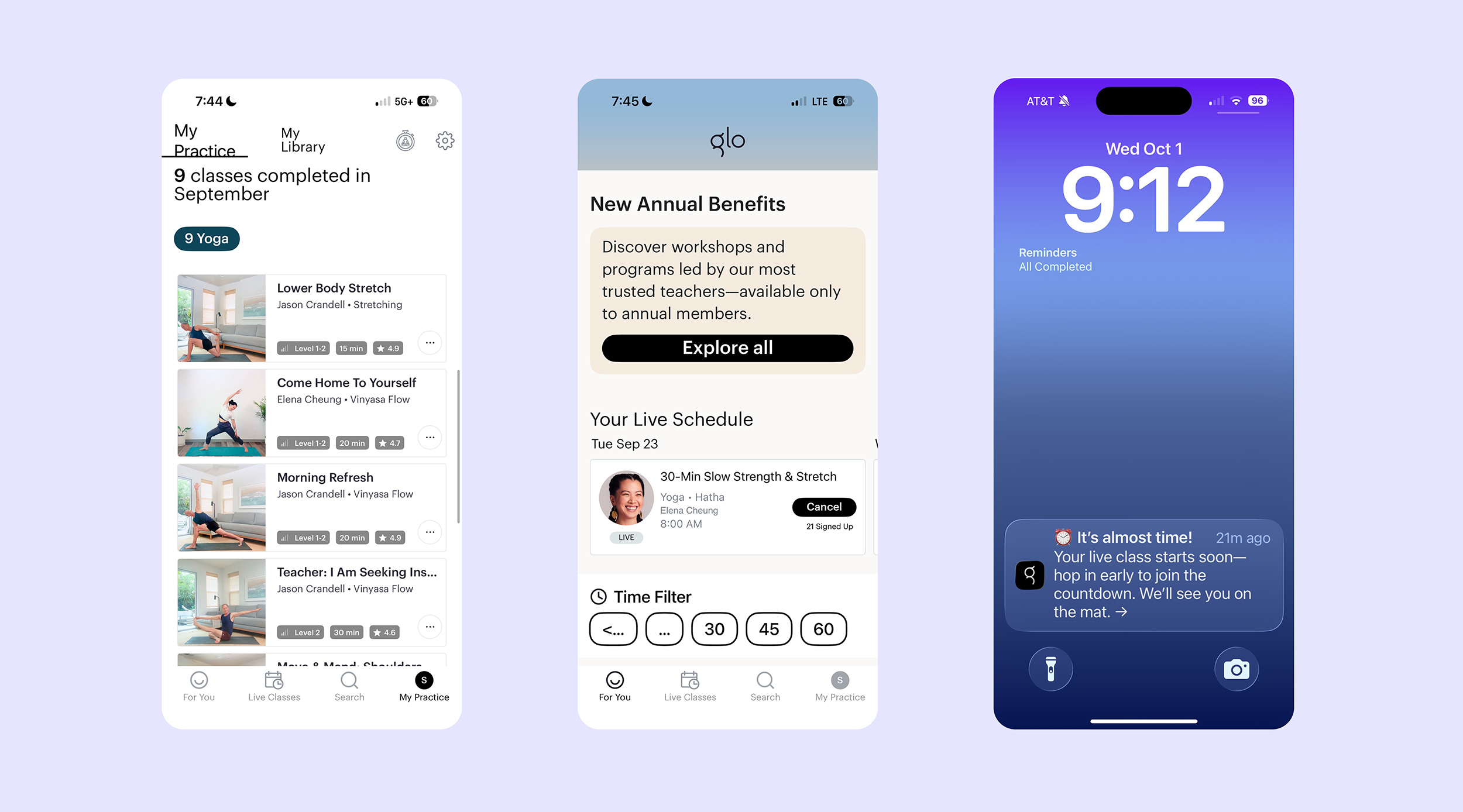
I've spent most of my career in front of screens, and as a remote worker, I often rely on short yoga sessions to break up long stretches of digital focus. When I skip those breaks, I feel it—more stress, less clarity, and lower energy by the end of the day. So I gave myself a simple challenge – 30 days of yoga using the Glo app.
Beyond personal goals, I was curious about how well digital products support real habit formation.
The habit loop: A UX foundation
In Charles Duhigg's book, The Power of Habit, the author outlines a 3-part process for building habits.
- The Cue - The moment or signal that initiates the behavior. Effective cues align with existing routines—like opening your laptop in the morning or finishing a long bike ride.
- The Routine - The behavior itself. In product design, this should be simple, low-friction, and easy to complete so users can repeat it consistently.
- The Reward - The positive outcome that reinforces the behavior. This can be intrinsic (how you feel after yoga) or product-driven (progress indicators, streaks, or encouraging feedback).
Habit-driven products rely on this simple structure.
To increase my odds, I built two cues into my day:
- Morning cue: yoga right after waking up
- Cycling cue: a short cooldown flow after long bike rides
These triggers aligned with existing behaviors—something every good habit-forming product tries to do.
Glo made the "routine" part easy. With thousands of classes, including short 10–20 minute sessions, it lowered friction and made consistency more accessible.
The reward, of course, is the way you feel afterward. But this is where the product experience itself should amplify motivation—and where Glo misses an opportunity.
Where Glo falls short: Streak visibility
Glo's My Practice dashboard shows year-to-date totals, weekly classes completed, and minutes practiced—valuable data, but not practical motivation.
There's no visible streak. The only place to infer one is a calendar view, which requires flipping month by month.
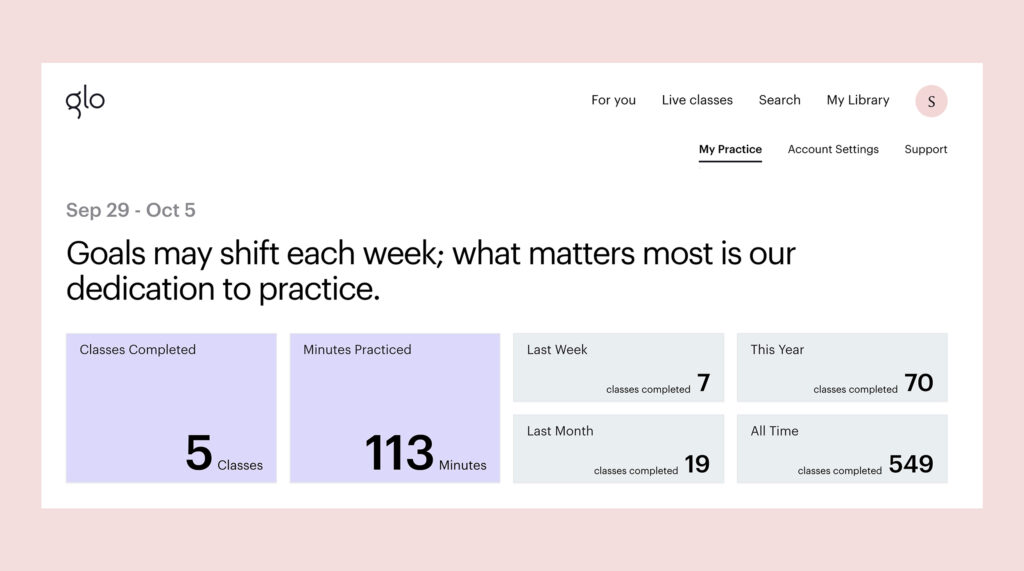
For habit formation, streaks matter. They show progress at a glance, reinforce identity, leverage loss aversion, and turn daily action into momentum.
By hiding streaks, Glo hides one of the most powerful behavioral levers.
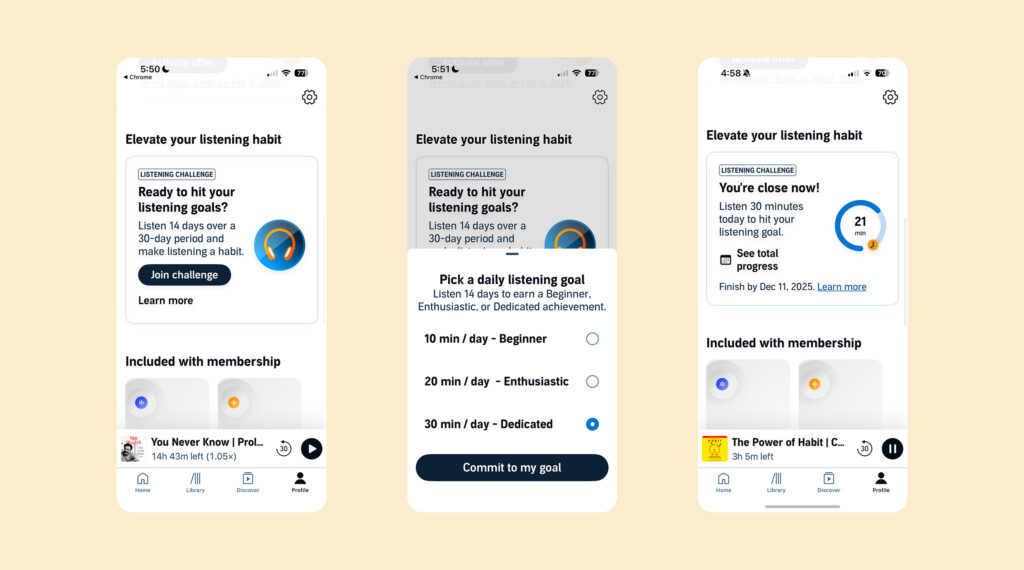
Contrast this with Audible, which uses streaks, conversational nudges, and clear goal framing. A small amount of thoughtful UX can reinforce meaningful habits.
The habit worked—but not because of the product
Despite the product gaps, the 30-day challenge worked. I explored new instructors, took more varied classes, and relied on short flows to stay consistent. As of writing this, I've passed 80 consecutive days. But the interesting insight is my habit succeeded because I understood the habit loop and created the cues—not because the product supported them.
With stronger streak indicators, contextual cues, and clearer motivational feedback, Glo could turn an already great content library into a truly habit-supportive experience.
No Comments.